


Music Lights Up a Child’s Brain
Have you ever watched your toddler bounce or sway to music with joy and concentration? In moments like these, your child’s brain is busy forming important connections. Research shows that music stimulates many parts of the brain, helping children build pathways for language, memory, movement, and early math skills.
The steady beat and repeating patterns in music help children learn about counting, rhythm, and patterns. Singing songs and rhymes strengthens language development and vocabulary. When music includes dancing, clapping, or playing instruments, it engages the whole body and supports coordination and learning.
Most importantly, music creates joyful moments of connection between children and caregivers.
Simple Ways to Use Music at Home
Rock and sing with your baby: Gently rock your baby while singing songs or nursery rhymes.
Listen to many types of music: Expose your child to different styles such as classical, folk, rock, or children’s music.
Repeat songs and rhymes: Repetition helps children learn rhythm, language, and memory patterns.
Change the tempo: Try singing songs faster or slower to help children notice rhythm and timing.
Move to the music: Dance, sway, clap, or march together to the beat.
Play simple instruments: Let children tap, shake, or drum along with music.
No Instruments? No Problem!
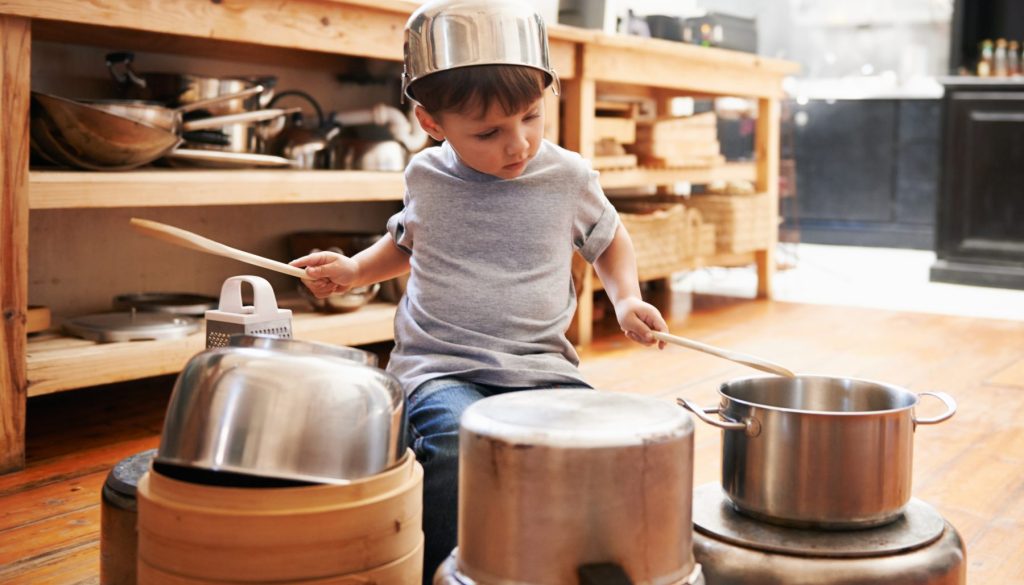
You can easily make instruments from items around the house:
- Bucket + wooden spoon = drum
- Pot lids = cymbals
- Small container with beans or rice = shaker
- Keys = jingle instrument
- Blowing across a bottle = simple horn sound
Homemade instruments allow children to explore rhythm, creativity, and sound while having fun.